



Have you ever wondered where creativity actually starts?
Does it happen during a brainstorm over bad coffee? Or perhaps halfway through a Tuesday morning run?
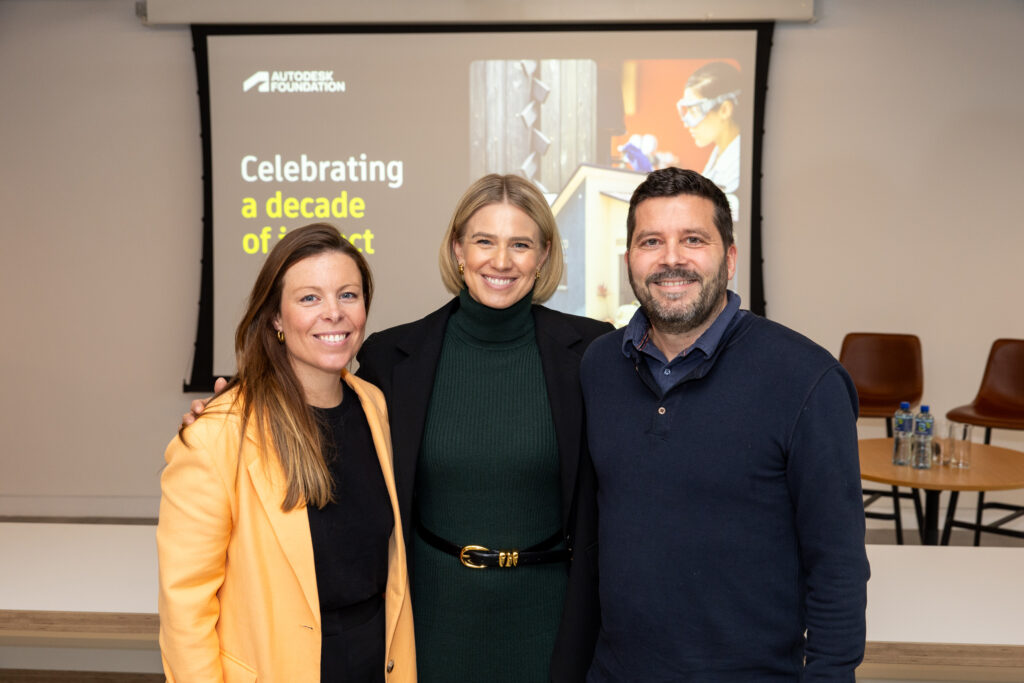
Recently, we hosted an Instagram Live conversation with inspiring mentors from Autodesk, Nostra, and the wider B!G Idea mentor community. Among our guests were Amanda Fennell, Tyrone Williams, Kate O’Connor, and Cormac Donnelly.
Collectively, they represent marketing leadership, service management, and retail sales. To make things interesting, we challenged them with our famous 15-second buzzer to uncover what really makes their creative brains tick.
Spoiler alert: it’s not just sticky notes and mood boards. Instead, this conversation revealed where creativity truly begins — and what experienced industry mentors have learned about creative thinking in real life.
Interestingly, creativity rarely arrives on schedule — and it certainly doesn’t always appear at a desk.
For some mentors, ideas surface while exercising, because movement frees the mind. Meanwhile, others find that creativity sparks when they face a brand-new challenge with no clear solution. In fact, that very uncertainty often fuels the best ideas.
However, creative blocks are very real.
When ideas dry up, our mentors agree on one key principle: stop forcing it. Rather than pushing harder, step away. Change your focus. Speak to someone else. Let your mind reset. As Amanda explained, the best ideas often arrive the moment you stop chasing them.
Of course, creativity rarely happens in isolation.
Working with others brings both opportunity and challenge. Some people need quiet time to process ideas; others thrive in high-energy discussion. Therefore, creating an environment where everyone feels heard requires awareness and intention.
One important lesson echoed a core principle of The B!G Idea: flearning.
As Cormac shared, failure isn’t something to fear. Instead, it forms part of the learning process. By experimenting, adapting, and improving, teams unlock stronger ideas. That mindset, in turn, creates space for real innovation.
Ultimately, the myth of the lone creative genius doesn’t hold up.
Our mentors consistently thrive in diverse teams, particularly when collaborating across industries and backgrounds. Because different perspectives challenge assumptions, better solutions emerge.
Whether working through The B!G Idea programmes or across sectors, creativity grows when viewpoints collide. As Amanda put it, seeing the same problem from multiple angles is where the real magic happens.
At first, trying to invent something completely new can feel overwhelming. Nevertheless, creativity doesn’t always require starting from scratch. In practice, many powerful ideas improve on what already exists.
Add a twist. Layer on a better experience. Refine something familiar.
Equally important, make ideas tangible quickly. Sketch them. Prototype them. Test them. Instead of keeping everything in your head, bring it into the real world.
And above all, enjoy the process.
As Kate reminded us, having the craic is often where the best ideas are born.
Whether you’re leading a team, developing a concept, or planning your next move, the message from our mentors remains consistent.
Look around. Learn continuously. Trust your instincts. And above all, don’t be afraid to fail — even gloriously.
Stay curious.
Be bold.
Back yourself.
Through programmes like The B!G Idea, students discover how creativity, collaboration, and real-world problem-solving connect — and why that connection truly matters.